The below story was written for Vermont Catholic magazine by Cori Fugere Urban a staff writer.
There is quite a bit of wiggling going on in Mary Johnson’s fourth-grade classroom at The All Saints Catholic Academy in Morrisville—and it’s not the children who are wiggling and squirming.
It’s the worms.
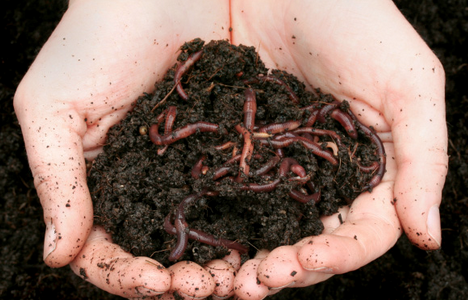
The 11 fourth graders have been learning about vermicomposting, a process that uses worms to turn organic wastes into high quality compost.
“I’ve always wanted to do this,” Johnson said. “It’s a way to relate (curricular) content about living organisms to real life.”
Carrie Wilson, head of school, admitted she was a little taken aback when Johnson approached her over the summer about bringing worms into her fourth grade classroom. “However, vermicomposting is something we have done previously at All Saints Catholic Academy, and I remember how enriching it was for the classroom,” she said. “Students really embraced the process of vermicomposting and were quite proud of the results.”
This year’s fourth graders researched vermicomposting online and created a presentation for the school, and they sold refreshments at Homecoming, raising the $150 needed to have a 17-inch wooden cube worm bin built for the class and purchase a pound of red wigglers.
Children who want to feed the worms collect scraps from the cafeteria—mostly carrot peelings and celery tops. The worms’ “castings” (waste) create the rich fertilizer.
As the worms eat through compost, their waste creates an optimal soil enricher. Worm castings resemble football-shaped particles that improve soil aeration and drainage and increase water retention in the soil.
“It will turn into beautiful, dark soil you can put on a garden,” Johnson said.
She is planning a class garden in which to use the compost, perhaps initially to grow pumpkins for the school.
“It’s really important to teach students as early as possible the benefits of recycling,” Wilson said. “Vermicomposting, in essence, is a form of recycling, and it’s proven to be a fun activity to implement here at school.”
By recycling waste onsite, the students are reducing the amount they throw away. “The capital investment has been minimal, and the technologies to support this project have been fairly simple,” Wilson said. “Students have been very responsible in their approach, and as a school, one of our initiatives is to be good stewards of the environment.”
But the vermicomposting project is about more than worms, food scraps, fertilizer and gardening.
The children have learned about science and the issue of global warming; they have learned math as they calculated how much food to feed the worms and how much wet paper toweling needs to be added to the bin. Their literature studies included writing poems about worms and researching worms for their presentation to the school.
And they are relating the worm project to religion. “How do we live our life and care about each other, care about the planet?” Johnson said. “What would Jesus do?” He would have cared. He would have done things to protect the planet.”
Calvin Cacciamani, 9, said the project has helped him learn how worms help the Earth, and he likes the idea of using the compost rather than chemical fertilizers “that would hurt the Earth.”
“God wants our Earth to be healthy and not have chemicals floating in the air” or in the soil, he said. “When we have a clean Earth, we are respecting everyone on Earth and the animals and also respecting God because He made this world to be healthy and people not to have a big world of chemicals everywhere.”
“I’m kind of one of those people who likes to get dirty,” admitted Molly Wilson, 10, who enjoys caring for the worms and doesn’t mind picking up the square of burlap used to hold the moisture in the bin. (The worms are eating the burlap too, and when she picked it up recently, several worms were stuck to it.)
“It’s fun getting dirty, plus somebody needs to do it [care for the worms],” said Anney Blanck, 10.
Jonathan Brosseau, 10, is not a big fan of the worms. “I kinda don’t like them because they’re disgusting, but I do like them because they help the Earth,” he said.
___________________________________________

